Every cyclist who has pedalled up the punishing climbs of the Dandenongs or battled a headwind along Beach Road knows that a smooth-running drivetrain is worth its weight in carbon fibre. Yet many riders neglect the humble chain until something starts clicking, skipping, or worse—snapping at the worst possible moment. Chain wear, commonly called "chain stretch," is one of those gradual problems that sneaks up on you like a magpie in spring. By the time you notice something's wrong, the damage has often spread far beyond a simple chain replacement. Understanding chain wear isn't just about keeping your bike running smoothly; it's about protecting your wallet from the cascading costs of premature cassette and chainring wear. The good news? A little knowledge and a simple tool can save you hundreds of dollars and keep you spinning happily for thousands of kilometres.
Understanding What Actually Wears Out
Contrary to popular belief, chains don't actually stretch like a piece of elastic. What happens is far more insidious and interesting. Inside each chain link are pins, bushings, and rollers, all working together in a precisely engineered dance. As you pedal, tremendous forces concentrate on these tiny contact points, gradually wearing away the metal. The pins develop grooves, and the bushing holes enlarge, causing the effective length of the chain to increase. This is why we call it "chain stretch"—the pitch between pins grows longer even though the metal itself hasn't stretched.
A brand-new chain has a pitch of exactly 12.7 millimetres (half an inch) between pin centres. This precision is critical because your chainrings and cassette teeth are cut to mesh perfectly with this spacing. As the chain wears and the pitch increases, the chain no longer sits properly in the teeth. Instead of nestling deep into the valleys between teeth, a worn chain rides higher on the tooth profiles. This reduced contact area accelerates wear on your cassette and chainrings, creating a domino effect of destruction throughout your drivetrain.
The mathematics of chain wear are surprisingly stark. Industry consensus suggests replacing a chain at 0.5 per cent elongation for 11 to 13-speed drivetrains, and 0.75 per cent for older 6 to 10-speed systems. To put this in perspective, 0.5 per cent elongation means your 12-inch measurement across 12 links has grown to just 12 and 1/16 inches—a tiny difference that has massive implications for your components' longevity. Wait until 1 per cent elongation (12 and 1/8 inches), and you're almost certainly shopping for a new cassette alongside that chain.
Why Aussie Conditions Accelerate Wear
Living and riding in Australia presents unique challenges for drivetrain longevity that riders in other parts of the world simply don't face to the same degree. Our harsh, dry summers can turn even the cleanest drivetrain into a grinding paste of dust and lubricant. The infamous Australian "bull dust" found on many gravel roads is particularly insidious, consisting of ultra-fine particles that work their way into every crevice of your chain's internal components.
Coastal riders face an entirely different enemy: salt air. Even if you never ride directly on beachside paths, the salt-laden atmosphere in coastal areas from the Gold Coast to Fremantle accelerates corrosion on chain pins and rollers. This corrosion compounds wear, creating rough surfaces that act like sandpaper on your entire drivetrain. Many riders who live near the coast find their chains wearing significantly faster than their inland counterparts, even with meticulous maintenance.
Then there's the question of riding style and terrain. Australia's diverse landscape means riders might tackle the rolling hills of the Adelaide Hills one weekend and the flat, fast stretches around Canberra the next. Climbing puts significantly more tension through the chain, accelerating wear on the pins and bushings. High-torque efforts, whether sprinting for a town sign or grinding up Old Federal Highway in Canberra, concentrate forces on fewer chain links, wearing them faster than steady-state riding.
The Economics of Proactive Replacement
Here's where understanding chain wear transitions from abstract mechanical knowledge to concrete financial sense. A quality chain for a modern 12-speed drivetrain might cost anywhere from $60 to $150 depending on the brand and level. A matching cassette can run $80 to $300, and chainrings can add another $100 to $400 to the bill. The math becomes starkly clear: replacing a chain at the right time means potentially running three, four, or even five chains through a single cassette and chainring set. Let a chain wear too far, and you're suddenly looking at $300 to $800 in parts alone.
The relationship between chain wear and cassette wear is well-documented by testing organisations like Zero Friction Cycling, an Australian-based outfit that has done more than almost anyone to quantify chain wear and efficiency. Their extensive testing shows that replacing chains at 0.5 per cent wear can extend cassette life by three to five times compared to waiting until the chain reaches 1 per cent elongation. For riders covering significant kilometres, this difference can amount to hundreds of dollars saved annually.
There's also an efficiency argument to consider. A worn chain doesn't just wear out other components faster; it also robs you of watts. The increased friction from worn pins and bushings, combined with the suboptimal mesh with cassette teeth, means you're working harder to maintain the same speed. For competitive riders or those who simply enjoy going fast, this hidden tax on performance adds up over thousands of kilometres.
How to Monitor Chain Wear Yourself
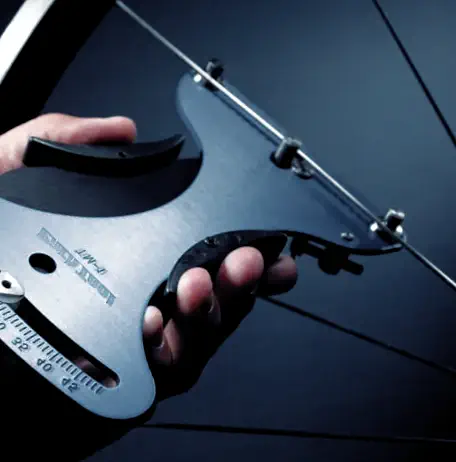
Monitoring chain wear doesn't require a fully equipped workshop or a degree in mechanical engineering. The simplest and most accurate method for home mechanics is a dedicated chain checker tool. These come in several styles, from simple drop-in gauges to digital readout devices. The drop-in style, such as the Shimano TL-CN42 or Pedro's Chain Checker Plus, measures pin wear by placing the tool in the same direction as chain tension, avoiding the false readings that can plague some other designs.
Using a chain checker is straightforward. For a drop-in tool, you simply insert one end into the chain, then see if the other end drops in. If the 0.5 per cent side drops in, your chain is due for replacement. If the 0.75 per cent side drops in, you may need a new cassette as well. It's worth checking multiple points along the chain, as wear isn't always uniform, especially if you tend to ride in the same gears repeatedly.
For those who prefer a more precise measurement, digital chain checkers like the Park Tool CC-4 or KMC Digital Chain Checker provide exact readings. These tools let you track wear progression over time, helping you anticipate when replacement will be needed rather than being caught off guard. The investment of $30 to $80 for a quality chain checker pays for itself the first time you avoid premature cassette replacement.
You can also use a simple ruler, though this requires more care and precision. A quality steel ruler is best, as fabric tape measures can stretch and provide inaccurate readings. Measure from the centre of one pin to the centre of another pin exactly 12 inches away (this will be 12 complete links). Anything beyond 12 and 1/16 inches indicates your chain has exceeded 0.5 per cent wear and should be replaced.
Building a Maintenance Routine
The most effective approach to chain maintenance is building it into your regular riding routine. After every few rides, or at least weekly for regular riders, take a moment to wipe down your chain with a clean rag. This simple act removes the surface grime that would otherwise work its way into the chain's internals. Follow this with appropriate lubrication, wiping off any excess to avoid attracting more contaminants.
Every month or every 500 kilometres, whichever comes first, check your chain for wear. This frequency ensures you catch wear before it becomes critical, especially important for riders using 12-speed drivetrains where the wear tolerance is tighter. Keep a log of your measurements if you're the organised type; this data helps you understand your personal wear patterns and anticipate future maintenance needs.
Deep cleaning your drivetrain periodically, ideally every 1,000 to 2,000 kilometres, provides an opportunity to inspect all components closely. Remove the chain and cassette, clean everything thoroughly, and examine chainring teeth for the "shark fin" profile that indicates advanced wear. This is also the time to inspect derailleur pulley wheels, which can wear and contribute to shifting issues if ignored.
When Professional Service Makes Sense
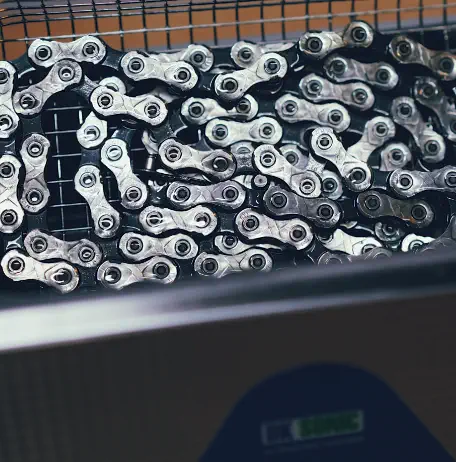
While home maintenance is valuable, there are times when professional drivetrain service delivers benefits beyond what most riders can achieve at home. Professional mechanics have ultrasonic cleaners that remove contaminants from every crevice of your chain and cassette. They have the experience to spot subtle issues like bent derailleur hangers or worn pulley wheels that might be affecting your shifting.
For riders with electronic groupsets, whether Shimano Di2 or SRAM AXS, professional service becomes even more valuable. These systems require precise setup and firmware updates that go beyond traditional mechanical skills. A professional drivetrain service can ensure your electronic derailleurs are properly calibrated, your limit screws are correctly set, and your entire system is operating at peak efficiency.
Pedal Passion's drivetrain service costs make professional maintenance accessible for most riders.
For riders who want their drivetrain operating at its best without investing in specialised tools and cleaning equipment, professional service represents excellent value.